
The Unthinkable: In Conversation with EIDA x Vodafone Foundation
Domestic abuse already affects your organisation, and employers hold the power to change outcomes like mine.

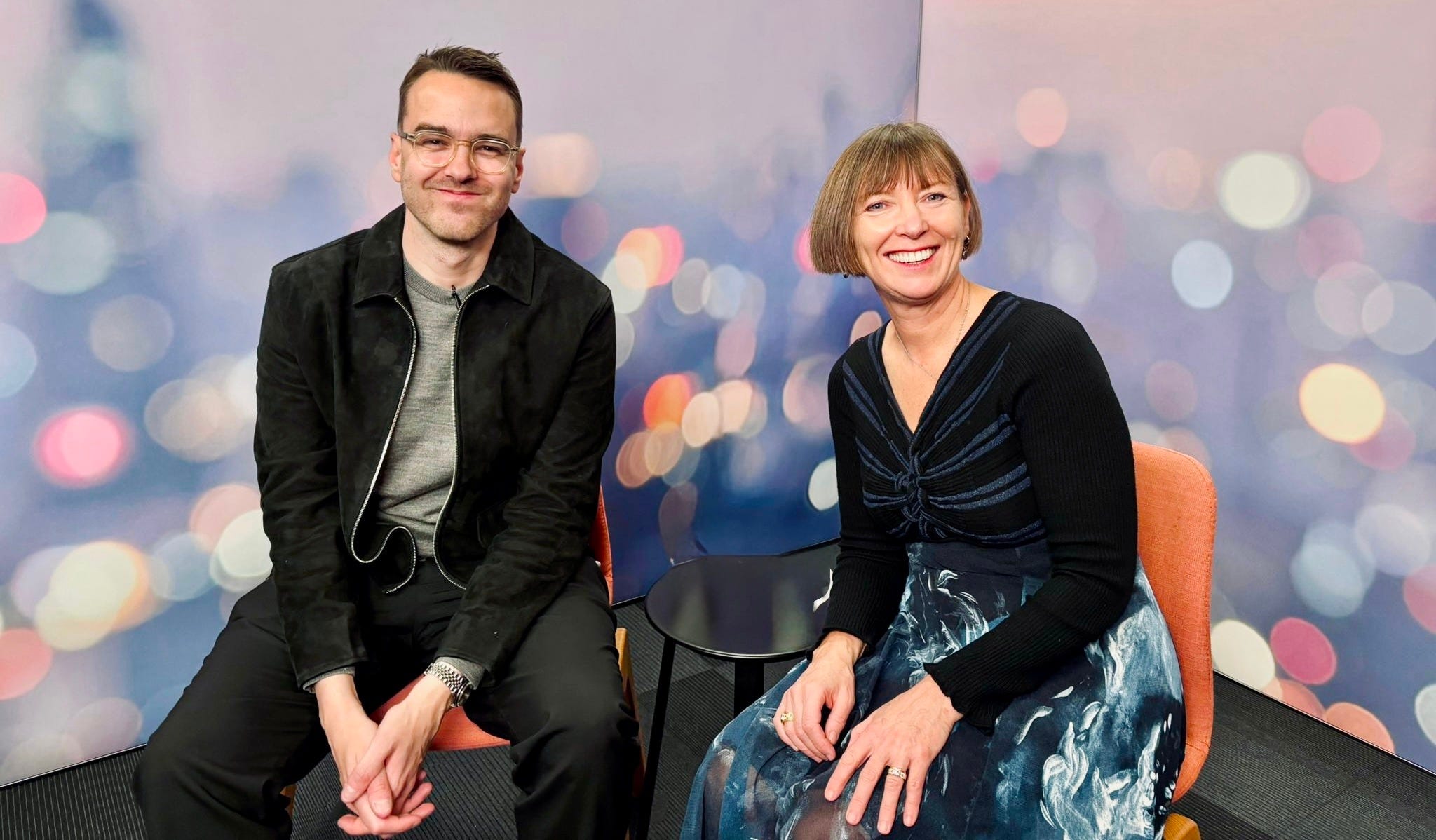
When you stand on a stage and look out at a room full of people, it’s easy to assume the person with the microphone has it all figured out. You see the steady voice, the composure, the control. But, what you don’t see is what it takes to get there. You don’t see the life before it, nor the years it took to believe that what happened in your home growing up counted as harm. You don’t see the child still sitting inside you, listening to every word you say.
Earlier this month I spoke at the Employers Initiative on Domestic Abuse Network Event, hosted by Vodafone and the Vodafone Foundation. Vodafone is one of EIDA’s founding Beacon members, and notably the first company to introduce a global domestic abuse response. They have also created the Bright Sky domestic abuse support app, which currently has over 1.4 million downloads worldwide.
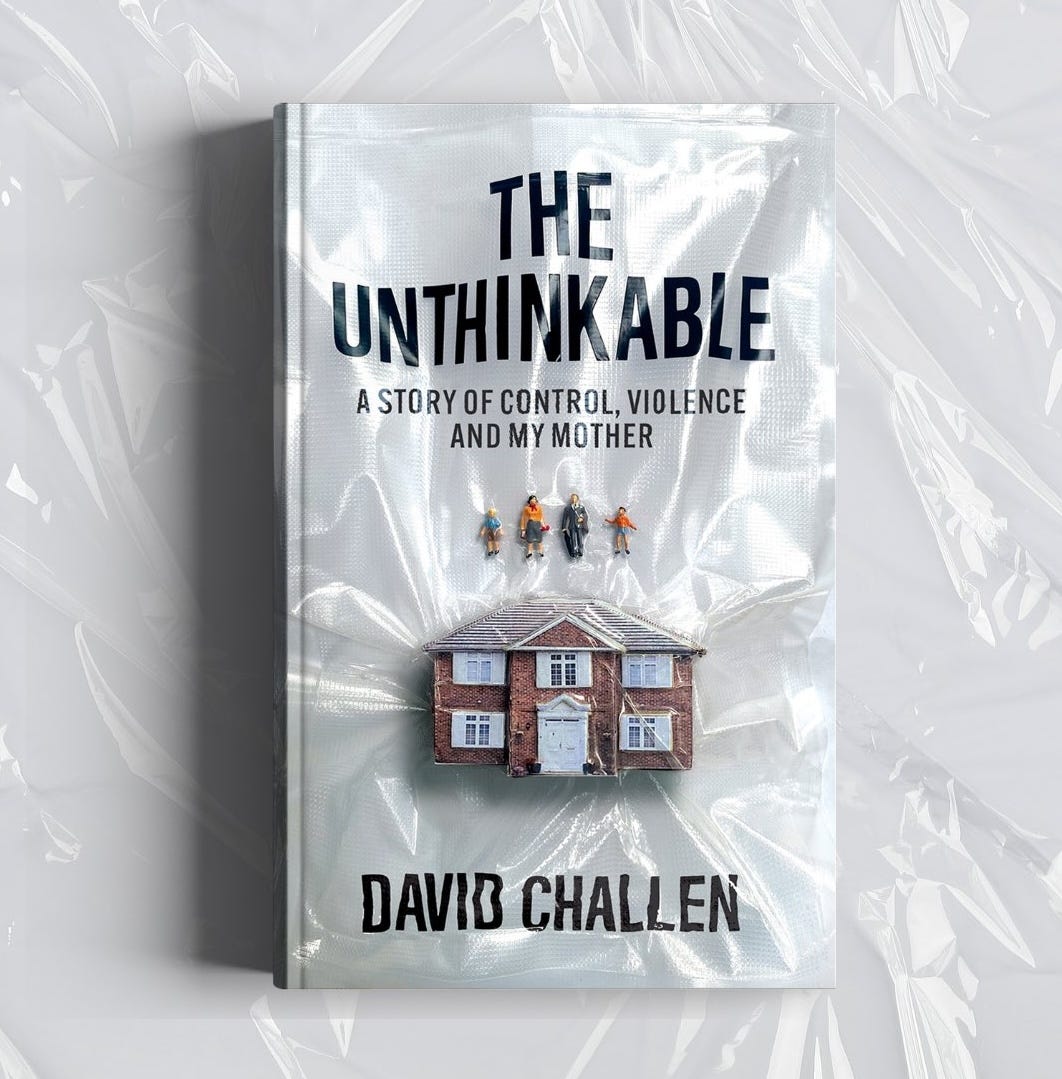
It was an afternoon centred on stories, understanding and responsibility. I was there to talk about The Unthinkable, the book I wrote and published in June about my own story, the campaign to free my mother, Sally Challen, and recognise the lifelong shadow coercive control casts over families. But more importantly, I was there to speak about the reality that every employer in this country sits on the frontline of an urgent national emergency that is too often hidden, too often minimised, and too often ignored.
Whenever I speak about my story, I return to the same truth. There were moments that could have stopped the escalation of violence that unfolded. When my mum tried to tell colleagues and her employer what she was facing from my father, no one had the language for it. At a time when coercive control did not exist in law, no one knew how to name what she was living through. She told her employer about the verbal humiliation she endured, including the fat=shaming and the way my father made her change her clothes before going out. It was a tiny porthole into the over 40-years of coercive control my mother suffered. Instead of supporting her, they tried to manage her out of her role when her performance slipped, not realising why. Colleagues could see she wasn’t herself. They saw the anxiety and her shrinking inwards.
And it wasn’t just them. Friends sensed it too. A friend of mine once stayed over in my adolescence and later messaged to say he could feel something was wrong in my home. Even my old guitar teacher later told me he remembered the tension when he visited. Outsiders felt it, but none of us had the words. You see, without the right language or awareness, there was nowhere for that recognition to land. No one knew how to help.
It was the way my mum shrank year after year under the weight of it. And I felt that it too as I grew older. I carried it in my body. Children always do. Children are tuning forks, I wrote in The Unthinkable. They vibrate with the atmosphere they live in. They’re porous to an atmosphere an abused parent has either normalised, or who has learnt to hide.
Domestic abuse shaped my childhood, but also cultivated vulnerabilities into adulthood I didn’t even know I carried, from depression, to addiction and even re-victimisation. And when I finally reached the point of writing it all in a book, I had to face the child I buried. That little David was not just a witness to what happened in my home; he was a survivor of it. The Domestic Abuse Act 2021 now recognises children who witness abuse as victims in their own right, yet so many of us grew into adulthood without the language or permission to see ourselves that way. I am one of those adults. I have spent a lifetime navigating the trauma that began in my childhood home, and the events that led to The Unthinkable became a journey to meet that child again, to reclaim the parts of myself I abandoned in the aftermath of my father’s death. This is why I centre children as co-victims of this violence in every place I speak. Because I believe there are millions of adults walking through the world who carry the same history and have never once been seen.
This is why speaking at the EIDA x Vodafone Foundation Network Event mattered to me. Because employers now sit in a very different landscape to the one my mum faced. We have language for coercive control now, an offence that reaches its ten year anniversary in December. We understand that domestic abuse is not limited to visible bruises or broken bones. It’s also the quiet collapse within that so many victim survivors carry. The sheen my mother held on to. The well rehearsed togetherness that looks intact until the moment it finally breaks.
As an EIDA Ambassador I recognise that work is not just an employer’s domain but often the only safe space someone has in their day. During the pandemic, we learned how fragile that space is, and how vital it can be.


And this is exactly why employers are one of the most powerful parts of the jigsaw to tackling domestic abuse. They see us. They sit beside us in meetings, in lunchrooms, in corridors. They notice the small changes that no one else sees. They can break the silence simply by knowing what to look for, and how to respond. By being persistently present.
EIDA exists to help employers become that point of safety. It is a free-to-join network of over 2000 employers across the UK across the UK, all taking steps to build domestic abuse awareness, policies and support into the fabric of their workplaces. Their work is practical and it is transformative. And it means that a person like my mum, walking into work today, is far more likely to be recognised and supported than she ever was.
Network Events like this one matter because they not only bring employers together, but they give a platform for survivors and advocates to share and help educate. They create spaces where we can speak openly about the reality of domestic abuse, instead of othering it. They dismantle the idea that this violence is something that happens in other people’s homes. Nothing changes if we treat domestic abuse as someone else’s problem. Nothing changes if employees feel too ashamed or too afraid to speak out.
What I shared at the event was simple:
Awareness is not optional. It saves lives.
Policies are not paperwork. They are pathways to support.
A conversation is not a small thing. Sometimes it is the first moment someone has been seen and heard in years.
And finally, survivor stories are one of the most powerful interventions we have.
My family’s story can be hard to hear, but it has its own redemption in how it’s helped others feel seen. My book is an extension of that, to realise the child’s perspective, and how connected, and impacted, we are as co-victims of this violence. But each time I speak, I hold on to the hope that someone in front of me will recognise a pattern they have been ignoring. Or that someone might find the courage to reach out for support. Or that a manager might go back to their workplace and quietly change the path for a family they may never meet, and that I will never know. That’s the trust we put in this work.
This is why I’m proud to be an EIDA Ambassador. I am proud to work alongside organisations like Vodafone and the Vodafone Foundation who understand that employer responsibility is not a ‘nice to have’ policy, but a crucial part of tackling domestic abuse at scale. Their leadership, and the leadership of EIDA’s Beacon Members, signals the shift we need in this country. A shift towards workplaces that understand the complexity of harm, the importance of empathy and the urgency of action.
We all have a part to play. Employers, colleagues, leaders and teams. And Network Events that centre survivor stories like mine remind me why I wrote The Unthinkable. Not just to look back, but to change what lies ahead.
If you enjoy my writing please LIKE 👍🏻 and COMMENT 💬, plus come further with me on this journey and SUBSCRIBE ✅ to check out more of my articles! Help make more of my writing possible! 🚀
Incredible work and application of your learnings to keep others safe.
Congratulations on publishing Unthinkable. 🥰 Your experience if domestic abuse in childhood shows that it carries into adulthood. I learned this at 59 years old. I also had abusive situations in adult relationships. It came as a shock to learn that a partner of 11 years was attempting to destroy me post separation. His litigation against me were malicious acts, and the Justice system in Spain failed to protect me.